




September 2026 Issue
Running on Empty
From the December 2025 Issue

An EXPERIENCE With Deeper Purpose
I know a man, now in his seventies, who is still embarrassed about something he did at Christmastime when he was around seven years old. Every Christmas his small town’s newspaper invited children to write a letter to Santa Claus and mail it to the paper. The paper would then publish, every day, scores of these short, sweet letters to Santa in the weeks leading up to Christmas Day.
This man loved the idea of sending a letter to Santa but decided to take an industrial approach to writing his Christmas list. He sat down with his family’s Sears Roebuck catalog—the equivalent of a modern Internet shopping site (discontinued in 1993)—and started writing his Christmas wish list to Santa. He paged through the toy section of the catalog, writing these words 36 times: “Would you please bring me a [name of a toy].” Halfway through his list he broke his stride and switched to requests for his family: a lamp for Mother, socks for Dad, a cowboy holster set for brother, and a food dish for their pet dog. Then he caught his second wind and continued asking for more toys for himself. All of this, mind you, in the laborious printing of a seven-year-old. He signed his letter, “Your friend, [first and last name]. P.S. I have been a good boy.”
Christmas is probably the most intentional and purposeful season of the year.
Christmas lists are part of the Christmas season, especially when it comes to gift-giving. Think about the first Christmas in Bethlehem. I imagine the Magi who came to worship the baby Jesus talked about what gifts they would take with them, settling on gold, frankincense, and myrrh. If they didn’t make a written list, at least they probably discussed it together and made a mental list of gifts.
But we make lists for more than gifts at Christmas. In fact, Christmas is probably the most intentional and purposeful season of the year. Our to-do lists grow long with things like grocery shopping, decorations, sending Christmas cards, invitations to social gatherings, and more. Our calendars become the equivalent of a holiday activity list. Taking a lesson from the Magi, we ought to include Jesus on our Christmas list along with all of the other gifts and activities we pursue. What will we give to Him that represents a purposeful demonstration of what we are celebrating? Asked another way, what is our personal “reason for the season”?
The first Christmas definitely had a purpose: It was an intentional revelation of the love of God for the world. Jesus didn’t enter the world just to be a moral example. He didn’t enter the world to start a religious movement. He came into the world to save sinners like us, to be a sacrifice for sin that allowed us to be reconciled to God. And He fulfilled that purpose. Every Christmas since then has been an opportunity to remember and demonstrate why He came.
It is easy to get caught up in the commercial and celebratory aspects of Christmas and forget about the serious reason for Jesus’ birth two thousand years ago. Remembering the purpose and focus of the first Christmas can remind us to create and demonstrate a mission and purpose of our own each year.
He came into the world to save sinners like us, to be a sacrifice for sin that allowed us to be reconciled to God.
Experience a Deeper Purpose
Everything that happened at the first Christmas was oriented around the baby Jesus. Mary and Joseph traveled from Nazareth to Bethlehem to give birth to Him. The shepherds who left their sheep and traveled into the town did so for one reason: to see the Baby. The Magi traveled hundreds of miles for one reason: to worship the King of the Jews. In other words, all the activity at that first Christmas was centered on the Savior coming into the world. The purpose was not social or religious; the purpose was worship and adoration.
As we make our lists of gifts and activities this Christmas, how can we incorporate the same purpose? One value was at the center of all the activity at the first Christmas: sacrifice. Mary and Joseph, the shepherds, and the Magi all made sacrifices to honor the birth of Jesus—as did Jesus Himself who sacrificed His divine prerogatives in order to become a humble human for our sake (Philippians 2:6-8). Paul wrote that we should have the same attitude (verse 5). And what better time than Christmas to demonstrate Christ’s sacrifice by incorporating sacrifice into our own activities?
One value was at the center of all the activity at the first Christmas: sacrifice.
Think about the sacrifices that made the first Christmas possible and consider including activities on your Christmas list that require a Christlike sacrifice.
Experience Greater Joy
Do you remember what the angel of the Lord said to the shepherds in the Bethlehem fields? “Do not be afraid, for behold, I bring you good tidings of great joy which will be to all people” (Luke 2:10).
“Great joy”—is joy part of our intentional Christmas experience? I don’t mean happiness and excitement alone but the deep-seated joy that is based on remembering what God has done through sending Christ into the world. Perhaps we could include “Experience and spread joy!” as a reminder when we’re making our list of Christmas activities.
Starting with ourselves, perhaps we can ask God to give us a fresh experience of the joy that is the fruit of the Holy Spirit (Galatians 5:22). Instead of letting busyness steal our joy, let us purpose to be a source of joy throughout the season. And then for others—think of those for whom joy may be absent this Christmas. Those alone and without family, those who are shut-ins or in nursing homes or the hospital or some whose circumstances in life have robbed them of the opportunity to celebrate Christmas. How might we spread the joy of the first Christmas to them?
Ask God to show you practical and sacrificial ways to manifest and share the joy that is the hallmark of Christ’s purpose in the world.
Experience Stronger Impact
What impact has Christ made in your life? How would your life be different had Christ not come into the world and paid the penalty for your sins? Without question, the birth of Christ, which led to His death and resurrection, has been the most impactful event in the history of the world. And yet it’s a fair question to ask what impact on the world do we have once a year at Christmas? We can’t change the whole world on our own, but we can impact our small corner of the world by sharing the Gospel of Christ in as many ways as possible during the Christmas season.
For example, if you send Christmas cards to friends and family, choose cards that have a true Christmas message about the meaning of the birth of Christ. Consider writing a personal note in your cards to those who don’t know Christ. If your church has services that focus on Christmas music and a message on the meaning of the birth of Christ, consider inviting friends who are not believers to attend with you. And look for ways to share the love of Christ through taking meals, sharing Christ-centered gifts, and making hospital visits where you can pray with those who may need to be loved and encouraged.
May we all look to God for guidance and creativity as we share a deeper purpose, a greater joy, and make a stronger impact on the world this Christmas season.
This article was first published in Turning Points Magazine & Devotional. Learn more about the magazine and request your free issues today!
More Articles


This Month's Magazine Resource
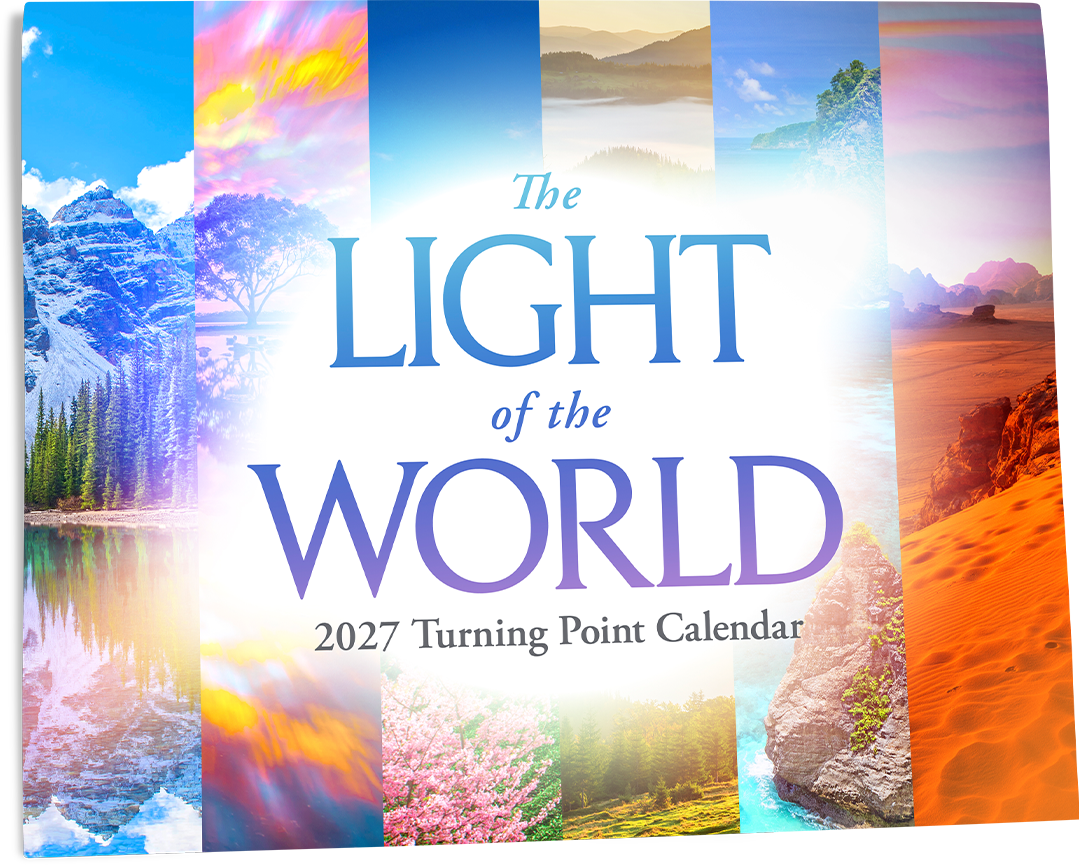
The Light of the World 2027 Calendar
Each month features a different region where the Gospel is reaching people. As you turn each page, you'll learn about the people, the language, and the need—and know that your partnership helps shine the light there.
Subscribe Now
Each month, read articles and devotionals from Dr. David Jeremiah that will encourage, challenge, and strengthen your walk with the Lord.




 Turning Point for God is a tax-exempt, not-for-profit, religious corporation as defined under Section 501(c)(3) of the Internal Revenue Code. Your donation gift(s) are very much appreciated and may qualify as a charitable deduction for federal income tax purposes.