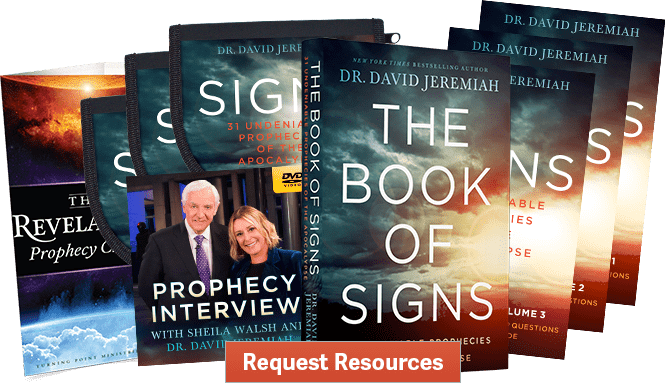

A masterwork on biblical prophecyA masterwork of core teaching on biblical prophecy from Dr. David Jeremiah

Learn More

Living in the Age of Signs

Online Destination

Today’s Audio Devotion:
The Greatest of These Is Love: Love the Unlovely

Do you know a “difficult” person? Perhaps in your family, church, or workplace. Do they get on your nerves? There were difficult people in the Bible too. Take Nabal, for example. He was “surly and mean in his dealings” (1 Samuel 25:3, NIV). Even his wife, Abigail, called him a “wicked man” and said, “He is just like his name—his name means Fool, and folly goes with him” (1 Samuel 25:25, NIV). Yet Abigail persuaded David to be forbearing, and the Lord took care of Nabal at the right time.

It is extremely hard to love “Nabals,” but God can give you a patient, forbearing spirit. Dale Carnegie said, “Any fool can criticize, condemn, and complain—and most fools do. But it takes character and self-control to be understanding and forgiving.”When we meet Christ, we experience His love for us—the unlovely. And we can ask for that same love to flow through us.

Why not take a moment now to pray for that difficult person in your life?

Not everyone is your brother or sister in the faith, but everyone is your neighbor, and you must love your neighbor.
Timothy Keller

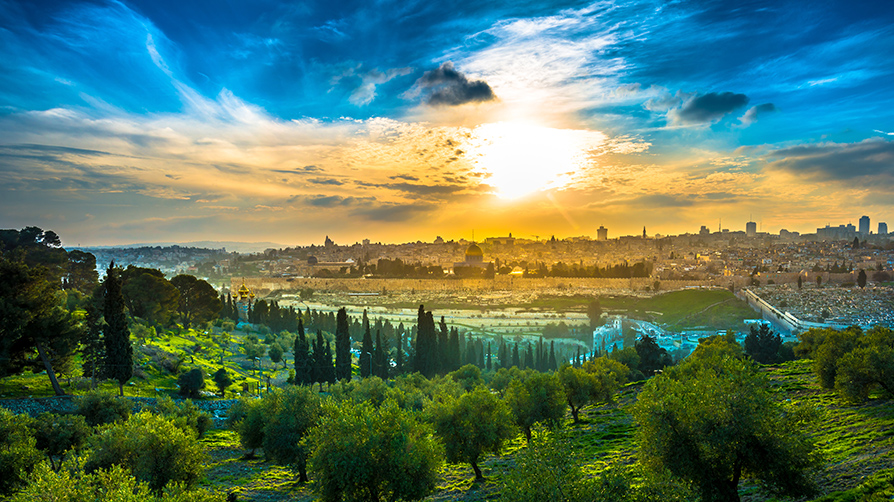
Of all God's covenant promises to Abraham, I believe the most amazing is His promise concerning the land. God told Abraham to leave his country, his family, and his father's house and go "to a land that I will show you" (Gen. 12:1). God then led Abraham to the land that would belong to his descendants forever.

The land promised to Abraham and his descendants was described with clear geographical boundaries. It takes in all the land from the Mediterranean Sea as the western boundary to the Euphrates River as the eastern boundary. The prophet Ezekiel fixed the northern boundary at Hamath, one hundred miles north of Damascus (Ezek. 48:1), and the southern boundary at Kadesh, about one hundred miles south of Jerusalem (v. 28). If Israelis were currently occupying all the land that God gave to them, they would control all the holdings of present-day Israel, Lebanon, and the West Bank of Jordan, plus substantial portions of Syria, Iraq, and Saudi Arabia.

The strange thing is, Israel has never, in its long history, occupied anywhere near this much land—not even at the height of its glory days under David and Solomon. This fact has caused many biblical scholars to spiritualize the meaning of the term land and equate it with heaven. Others claim these promises were conditional and were forfeited by Israel's disobedience.

In refutation of these interpretations, Dr. John F. Walvoord wrote:

The term land . . . used in the Bible, means exactly what it says. It is not talking about heaven. It is talking about a piece of real estate in the Middle East. After all, if all God was promising Abraham was heaven, he could have stayed in Ur of the Chaldees. Why go on the long journey? Why be a pilgrim and a wanderer? No, God meant land.1

Any normal reading of Scripture recognizes Canaan as an actual place, a piece of real estate, an expanse of soil that belongs to Abraham's descendants forever.

The fact that Israel has been dispossessed of the land in three periods of its history is not an argument against its ultimate possession. Occupation is not the same as ownership. After each dispossession, God brought Israel back to its originally promised land. God has consistently kept His promise to Abraham, and that gives us absolute assurance that He will keep it in the future.

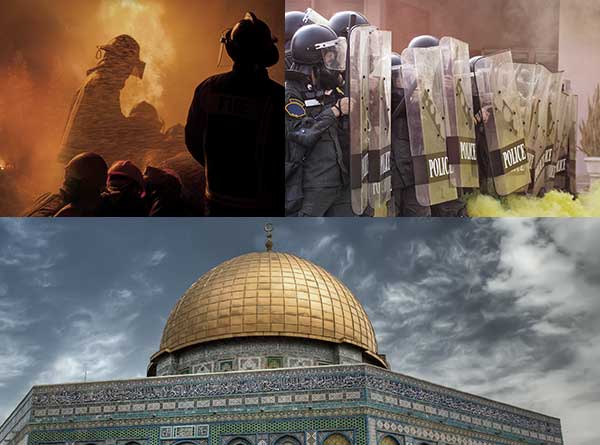
The turmoil over Israel's right to its land will not cease till the end, for the land provision of the Abrahamic covenant is at the core of the hatred of Middle Eastern nations for Israel today.

But ignoring God's care and protection of Israel is extremely dangerous. The land of Israel is so important to God that, according to Deuteronomy 11:12, it is "a land for which the Lord your God cares; the eyes of the Lord your God are always on it, from the beginning of the year to the very end of the year."

1J. F. Walvoord, "Will Israel Possess the Promised Land?" in Jesus the King Is Coming, ed. Charles Lee Feinberg (Chicago, IL: Moody, 1975), 128.

This article is an excerpt from chapter 1 of The Book of Signs.

Beyond the Promised Land

This is episode nine from The Account, an original Turning Point Television production that was created to introduce David Jeremiah's teaching series I Never Thought I'd See the Day! Its message remains relevant for us as we are Living in the Age of Signs.

The Account takes you back to the 1960's when the advertising agency of Wyndham Ridgestone landed the most mysterious client in the history of their firm. This shadowy and intimidating Client hires the firm to influence the masses—to sway the behavior of people toward a liberal mindset—to market a moral shift in American culture. The faceless and nameless Client presents ten issues to the advertising firm and employs it to create these morally destructive campaigns.


More [+] Less [-]

This is a Sample Title

1:37 / 3:48